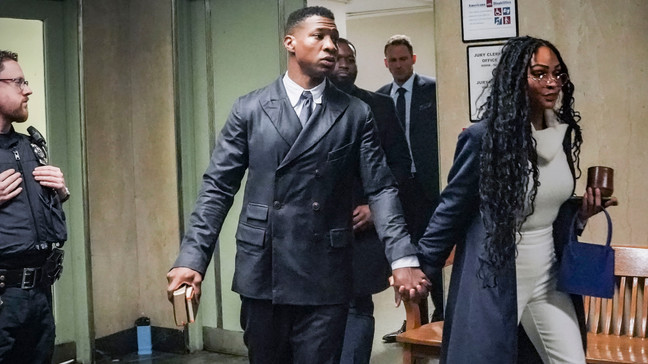
A jury on Monday found actor Jonathan Majors guilty of assault and harassment, concluding a trial that stemmed from a domestic dispute with his former girlfriend.
The verdict, delivered after several hours of deliberation, marks a significant legal turn for the 36-year-old actor, whose career had been on a rapid rise with roles in major franchises.
Majors was convicted on charges related to an incident that allegedly occurred in New York City earlier this year. His former girlfriend testified about the altercation, and prosecutors presented evidence they said supported her account.
The defense, however, argued that Majors was the victim, claiming he was the one attacked and that the charges were exaggerated. His legal team maintained throughout the trial that the evidence did not prove guilt beyond a reasonable doubt.
After the verdict, Majors's attorney said they plan to appeal, asserting that key evidence was improperly excluded and that the jury did not hear the full context of the relationship.
Prosecutors, meanwhile, hailed the verdict as a step toward accountability. In a statement, they thanked the jury for their careful consideration and expressed hope that the outcome would encourage others to come forward in similar cases.
The case has drawn widespread attention not only because of Majors's fame but also because of the broader conversations it has sparked about domestic violence, due process, and how such cases are handled in the public eye.
Majors, known for his roles in films like "Creed III" and various Marvel projects, has already faced professional consequences. Several studios paused or canceled projects following his arrest, and industry analysts say the verdict could further impact his standing in Hollywood.
Legal experts note that an appeal could take months, and until then, Majors remains free pending sentencing, which has not yet been scheduled.
The case also raises questions about the challenges of prosecuting domestic disputes, where evidence is often circumstantial and witness credibility becomes central.
For now, the verdict stands, and the entertainment industry is watching to see how studios respond. Some observers predict a permanent halt to his major franchise work, while others suggest a potential comeback story if the appeal succeeds.
Majors's next court date is expected to be set within weeks, and both sides have signaled they are prepared for a lengthy legal battle.
As the case moves forward, it serves as a reminder of the high stakes when personal disputes intersect with public careers.
For fans and critics alike, the outcome leaves lingering questions about what the future holds—for the actor, for the industry's handling of such cases, and for the broader cultural impact of this trial.