Anne Hathaway, Dakota Johnson, Josh Hartnett
LOS ANGELES — The truth was only ever the first draft. In 2026, the cinematic adaptation of the darkest corners of contemporary fiction expands with Verity 2: Unwritten Lies, plunging audiences violently back into the twisted, psychological web of the Crawford estate. Where its predecessor left viewers questioning the very nature of a devastating confession, this sequel fundamentally alters the rules of engagement. The narrative no longer asks what happened in the past; it dictates a terrifying, inescapable future. Dakota Johnson, Josh Hartnett, and Anne Hathaway all return to the claustrophobic walls of the Vermont manor, delivering a masterclass in manipulation that elevates the modern erotic thriller into a realm of absolute, suffocating dread. In this meticulously crafted continuation, nothing is as it seems, and every lingering silence is a potential trap.
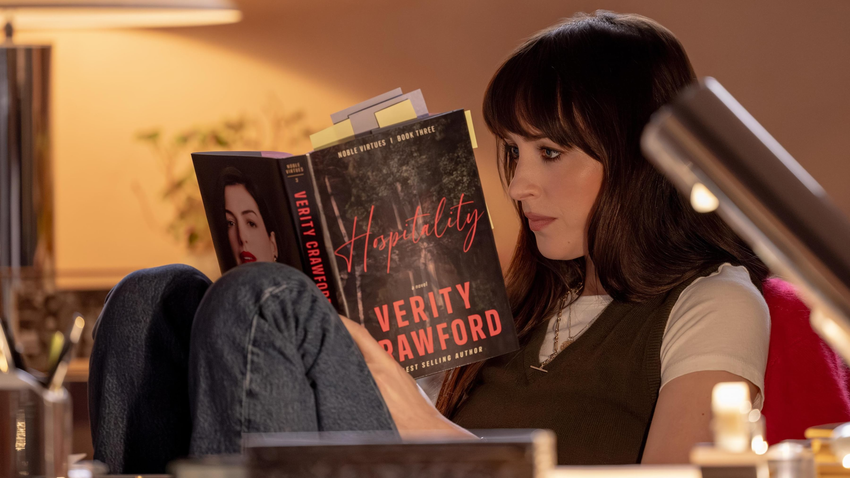
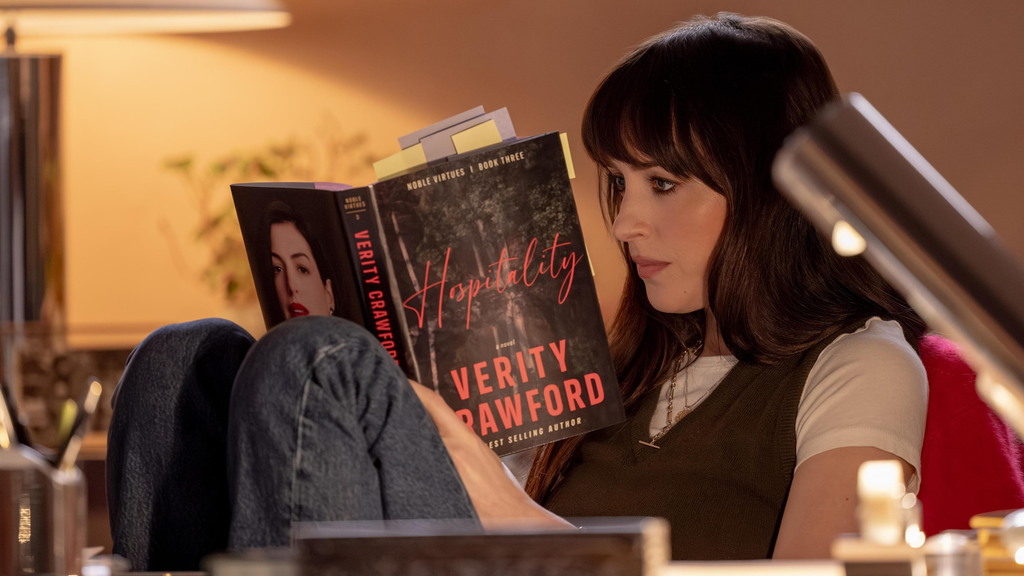
Dakota Johnson reprises her role as Lowen Ashleigh, a struggling writer who believed she had finally secured her happily ever after by burying the horrors of her predecessor’s life. The film opens with Lowen attempting to settle into her newfound domestic peace with Jeremy, having taken over both Verity’s career and her home. However, her hard-won reality begins to aggressively unravel when a second, unpublished, and devastatingly cruel manuscript surfaces from the depths of the estate. Johnson portrays Lowen not as a passive victim, but as a woman teetering on the edge of severe, justified paranoia. The new pages discovered within the floorboards do not simply recount past tragedies; they function as a chilling, real-time prophecy. Johnson captures the frantic, deteriorating psyche of a writer who realizes the story she thought she had escaped is actively writing its next chapter around her. Her performance is anchored by a desperate intelligence as she tries to decode the lethal narrative before it consumes her entirely.
Opposite Johnson, Josh Hartnett delivers what may be his most chillingly ambiguous performance to date. In the first installment, Jeremy Crawford was presented as the grieving, tragic hero—the perfect husband pushed to his absolute emotional limits by a monstrous spouse. Unwritten Lies aggressively dismantles that pristine image. Hartnett masterfully weaponizes his natural, leading-man charisma, allowing the facade of the perfect husband to slowly crack under the crushing weight of unburied secrets. The audience is constantly left guessing his true motives. Is he a protector trying to hold his fractured family together, a victim of two manipulative women, or the quiet orchestrator of a much darker design? Hartnett navigates this tightrope with terrifying subtlety. A lingering glance or a softly spoken word suddenly carries a violent undertone, transforming the Crawford home from a romantic sanctuary into a psychological prison. The seductive tension that once defined his relationship with Lowen curdles into a deep, mutual paranoia, making their shared screen time intensely uncomfortable and completely magnetic.
Yet, the true, undeniable terror of the film lies in the haunting, inescapable presence of Verity Crawford herself. Anne Hathaway reclaims the titular role with a terrifyingly calm and calculating brilliance. Whether appearing in newly discovered, visceral flashbacks, psychological manifestations tormenting Lowen’s waking hours, or something far more dangerously tangible, Hathaway’s Verity proves that a mastermind never leaves her final chapter to chance. She abandons the paralyzed, vegetative state that defined her previous on-screen physical presence, returning instead as an intellectual apex predator. Hathaway delivers her lines with a venomous elegance, completely dominating the narrative even when she is not physically in the room. Her performance forces the audience to question the very nature of authorship and control. Verity is not merely a character in a book; she is the architect of the nightmare, manipulating the board from beyond the established boundaries of the story.
The production design and cinematography of Unwritten Lies actively amplify this suffocating atmosphere of dread. The Crawford estate feels more isolated, colder, and infinitely darker than before. Shadows stretch unnaturally across the mahogany floors, and the meticulous sound design emphasizes the scratching of a pen, the creak of floorboards, and the howling wind, turning the house into a living, breathing entity that refuses to let its occupants go. The film fully embraces its identity as an erotic thriller, weaving seductive, dangerous tension seamlessly into the psychological horror. The intimate moments between Lowen and Jeremy are laced with heavy suspicion, proving that in the Crawford household, vulnerability is the fastest way to get killed. The director expertly uses the visual language of the thriller genre to blur the lines between reality and fiction, creating a disorienting, hypnotic experience that perfectly mirrors Lowen’s unraveling mind.
As the boundary between author and subject completely dissolves, the third act accelerates into a deadly psychological game of cat and mouse. Lowen finds herself trapped in a labyrinth where she must literally outwrite the creator of her own nightmare to survive. The film is packed with breathless, shocking twists that completely recontextualize everything the audience thought they knew about these characters, forcing them to frantically re-evaluate every scene. It challenges the viewer to decipher who is actually holding the pen and who is merely a character waiting to be brutally written off. Verity 2: Unwritten Lies is a stylish, pulse-pounding exploration of guilt, obsession, and the lethal power of storytelling. It stands as a chilling reminder that in the halls of the Crawford estate, words do not merely tell a story—they execute a sentence.